Stilt fishing (රිටිපන්න / Ritipanna, පිතිපන්න / Pithipanna, ගොඩපන්න / Godapanna) is a traditional fishing technique unique to the indigenous fishing communities of the Southern Province of Sri Lanka. In this remarkable method, fishermen catch fish without using bait, relying instead on generations of skill, patience, and deep knowledge of the sea.
From the past to the present, this fishing community has carefully preserved this historic practice. It reflects the intelligence, wisdom, and practical abilities of their ancestors, whose understanding of ocean behavior and fish movement has been passed down from father to son through generations.

Ritipanna Legacy
Fishermen balancing on wooden stilts, Koggala coast

බිලිකටුව (Bilikatuwa)
Handmade fish hook, crafted with ancestral precision
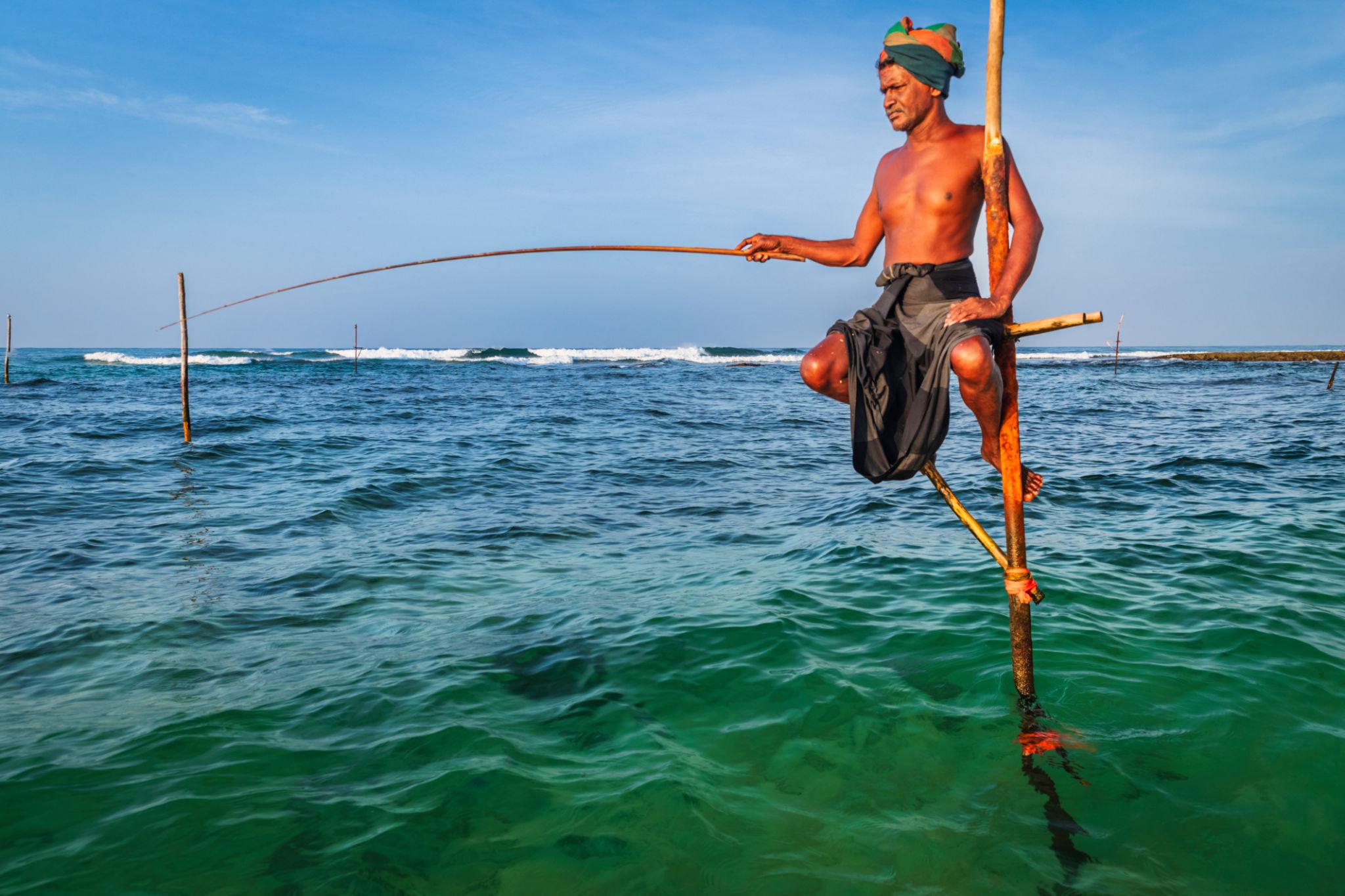
රිට (Rita)
Traditional wooden stilt anchored to seabed
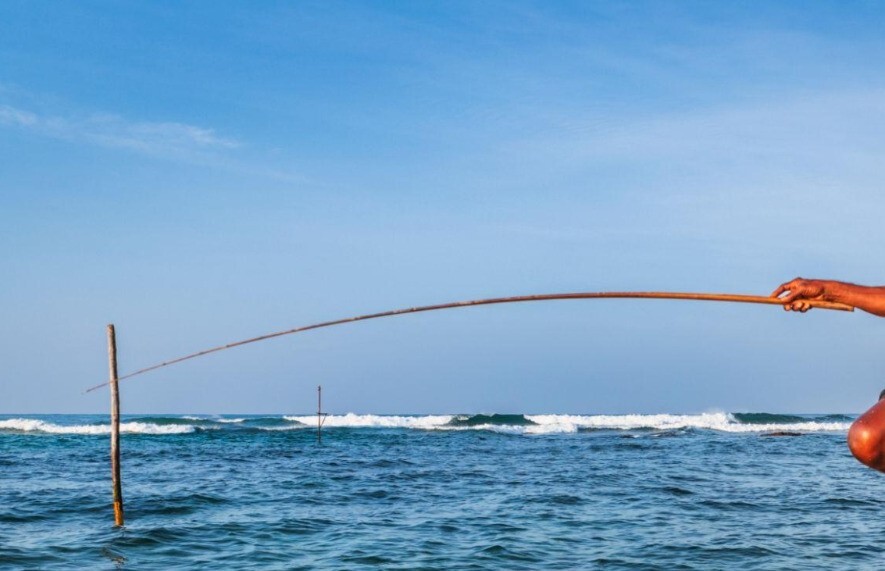
පිත්ත (Piththa)
Fishtail palm rod, flexible and durable
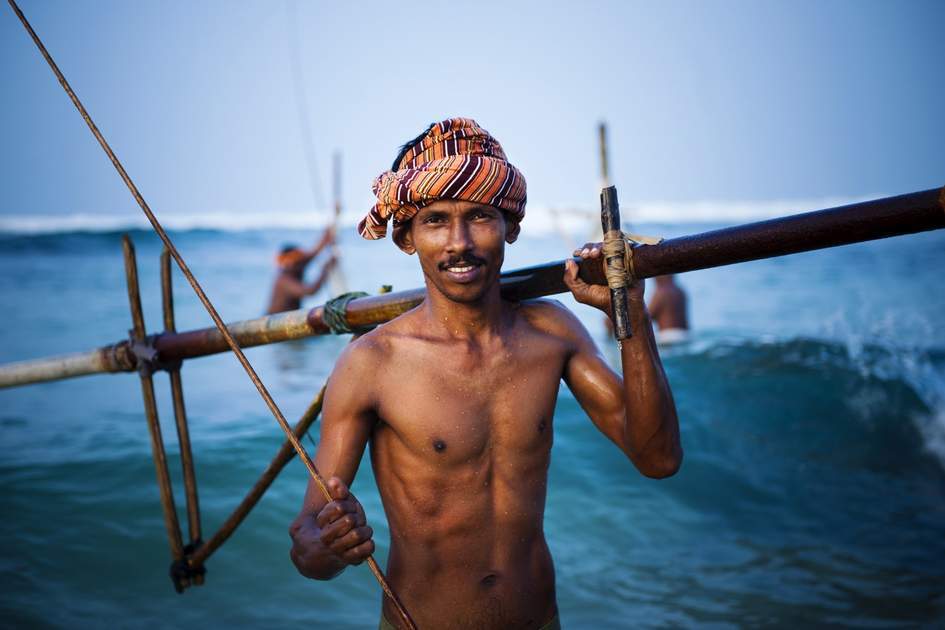
ධිවරයා (Diwaraya)
Skill and patience – the soul of stilt fishing

Koggala & Maraduwawala
Living tradition against Indian Ocean waves
The basic equipment required for stilt fishing is simple yet essential. It includes the handmade fish hook (බිලිකටුව / Bilikatuwa), the stilt pole (රිට / Rita), the fishing line (තංගුව / Thanguwa), and the fishtail palm rod (පිත්ත / Piththa). Along with these, the fisherman himself (ධිවරයා / Diwaraya) plays the most important role. All of these elements are traditionally handmade and carefully prepared, and stilt fishing cannot be carried out without them.
Fishermen follow their own traditional rules and practices during fishing time. They must remain calm, quiet, and precise, avoiding any movement that could scare the fish. When they sense that fish are approaching, they carefully prepare their gear using techniques passed down through generations. This process requires great attention and experience, as even a small mistake can cause the fish to move away.
The knowledge of stilt fishing is not learned from books but through experience and family tradition. It is passed from father to son, preserving both the skill and cultural identity of the community.
Stilt fishing is especially famous in coastal areas such as Koggala and Maraduwawala, where this unique tradition can still be seen today. These locations are well known for showcasing the beauty and cultural significance of this fishing method.
In areas such as Bilikatuwa, Kitul Pitta, and Rita, these traditional elements are still recognized as part of the fishing culture. The fishermen continue to maintain their deep connection with the sea and their heritage.
Among the main types of fish caught using this method are Koraburuwa and Bolla, which are important to the local fishing livelihood.
Today, some visitors may think that stilt fishing is only a tourist display. While demonstrations are sometimes performed for visitors, real stilt fishing still exists as a genuine livelihood. To experience the authentic practice, it is best to visit during the proper fishing season, when fishermen carry out this tradition naturally as part of their daily life.
✨ Cultural beliefs & traditions ✨
In Sri Lanka, communities have traditionally lived according to
different livelihoods, such as fishing and farming. Within these
traditions, there are also cultural beliefs connected to success
at sea. Some believe that when fishermen have a successful catch,
others may try to disturb the fishing grounds out of jealousy,
sometimes through rituals intended to drive fish away or create
fear among them.
However, fishermen also possess their own traditional knowledge to overcome such challenges. They use cultural and spiritual practices to restore balance and attract fish back to their fishing areas. One important ritual is known as “Ganmadu Shanthikarma”, a traditional peacemaking ceremony performed to protect the fishing grounds, remove negative influences, and ensure a successful and peaceful fishing season.
Through these practices, along with generations of inherited knowledge, stilt fishing continues to stand not only as a method of livelihood but also as a powerful symbol of Sri Lanka's cultural heritage and the deep connection between people, nature, and tradition.
🌊 "රිටි පන්නය — රැල්ලට ඉහළින් සුරැකෙන සජීවී උරුමය" | Stilt Fishing — living heritage above the waves.